
Glen Hazel Eagle Nest Faces a Heartbreaking Turn
A deeply difficult situation has unfolded at the Glen Hazel(Hays) bald eagle nest in Pennsylvania, after both eaglets, GH3 and GH4, appeared to show signs of illness over the last several days.
The most heartbreaking update so far centers on GH4, who has passed away. At this time, officials have confirmed only GH4’s death. GH3 has also appeared to be in very serious condition, though it has not been confirmed whether GH3 has also passed or remains critically ill.
For a nest that had been moving through such an important stage of growth, the sudden decline has brought a heavy and emotional turn. GH3 and GH4 had already reached the age where eaglets begin showing more strength, movement, and awareness in the nest. That made the change in their condition especially alarming.
Receive updates like this one in your email inbox. Subscribe to our newsletter.🦅
GH4’s Passing Leaves Many Questions
The cause of GH4’s death has not been determined. When young raptors suddenly become ill, there can be many possible explanations, including disease, toxins, contaminated prey, injury, or other environmental factors. At this point, no cause has been confirmed.
That uncertainty makes this update even harder. The illness appeared to affect both eaglets, which naturally raises concern about something they may have encountered through food, the nest environment, or another outside source. However, only proper testing can show what happened.
Watch Live <—- nest cam
A necropsy or other testing could help officials determine whether illness, poisoning, lead exposure, avian influenza, contaminated prey, or another cause contributed to GH4’s death. Those answers could also matter for GH3 and the adult eagles if any ongoing risk remains near the nest.
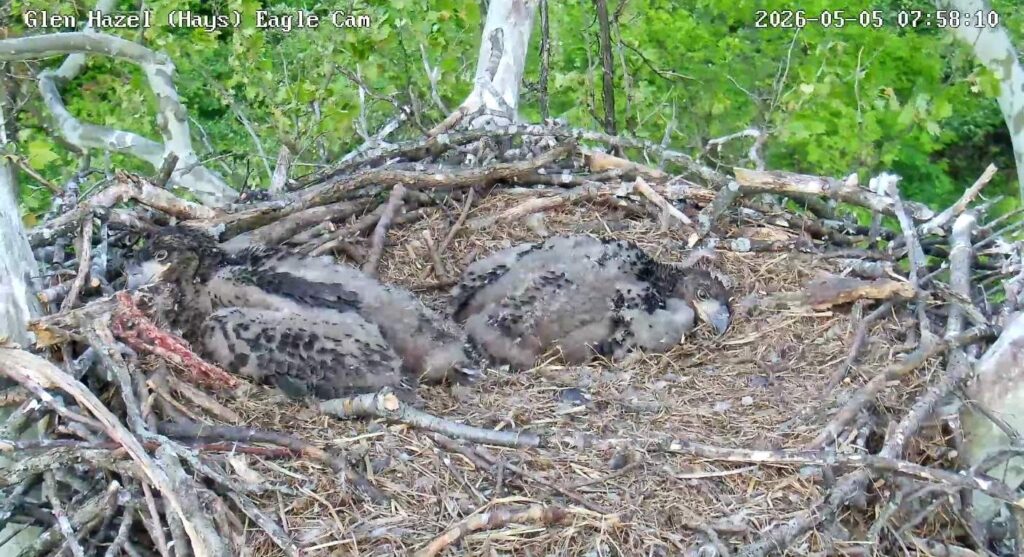
GH3 Remains a Serious Concern
GH3’s condition has also been extremely concerning. The eaglet has appeared very weak, and at times the situation has looked grave. At this time, GH3 appears either to have passed or to remain very, very sick. The only confirmed death is GH4. Eagle nest events can shift quickly, and official updates are important before stating anything as certain.
Why Intervention Is Not Simple
One of the most difficult parts of this situation is that federal law protects bald eagles, so officials cannot simply climb to an active nest and remove an eaglet. State and federal agencies must approve any retrieval, testing, or direct action. That includes efforts to recover GH4 for examination, assess GH3, or intervene in any way at the nest.
Those approval steps can feel painfully slow during an emergency, especially when young eaglets may be suffering. But because federal law protects bald eagles, agencies and licensed wildlife professionals must follow strict procedures before they enter the nest or handle the birds. At this time, those options are being explored.
The Adults May Hold Clues Too
Mom and Dad’s behavior may also be important as officials evaluate what happened. Adult bald eagles often continue caring for young even when something is wrong, but a sudden illness affecting nestlings raises concern about whether the adults brought in contaminated prey or whether there is another risk in the area.
If toxins, lead, rodenticide, or disease were involved, the adults could potentially be at risk as well. That is another reason testing may be important. The goal would not only be to understand what happened to GH4, but also to determine whether GH3, the parents, or other wildlife could still be in danger.
No cause has been confirmed, and it is important not to jump to conclusions. But testing could help turn a heartbreaking loss into useful information that may protect other eagles in the future.
A Difficult Reminder About Wild Nests
The Glen Hazel nest has already had a dramatic season, and this latest development is especially hard because both eaglets had made it through many early milestones. Young bald eagles face many natural dangers, but sudden illness in multiple eaglets is particularly concerning.
Wild nests can bring moments of beauty, growth, and survival. They can also bring painful reminders that even protected and closely followed eagle families remain vulnerable to threats that may be impossible to see from the ground.
For now, officials have confirmed GH4’s passing, GH3’s condition remains deeply concerning, and the next steps may depend on whether state and federal agencies approve retrieval, testing, or intervention by trained personnel.
This is a heartbreaking moment for the Glen Hazel eagle family, and the hope now is that testing or further review can provide answers about what happened inside the nest.
FAQ
What happened at the Glen Hazel bald eagle nest?
Both eaglets, GH3 and GH4, appeared to become ill over the last several days. GH4 has sadly passed away, while GH3 appears either to have passed or to remain critically ill. At this time, officials have confirmed only GH4’s death.
Has GH3 passed away?
GH3 has appeared to be in very serious condition, but officials have not confirmed whether GH3 has passed or remains very sick.
What caused GH4 to die?
Officials have not determined what caused GH4’s death. Possible concerns include illness, toxins, contaminated prey, lead exposure, or disease, but officials have not confirmed a cause.
Can officials retrieve the eaglets for testing?
State and federal officials must approve any retrieval, testing, or intervention at the nest. At this time, officials appear to be reviewing those options.
Why do officials need approval to help the eaglets?
Federal law protects bald eagles, so officials must authorize anyone to handle eaglets or enter an active nest. Wildlife officials and licensed professionals must follow strict procedures before they intervene.
Could the adult eagles be at risk?
That depends on what caused the eaglets’ illness. If disease, toxins, or contaminated prey played a role, testing could help determine whether the adult eagles or other wildlife face any risk.


any updates? hope adults are ok – been one month-