
PIP watch officially begins today at the KNF E-3 nest, and the timing could not be more precise. After weeks of steady incubation, quiet patience, and round-the-clock care, the two eggs laid by Andria III have now reached the window where the very first signs of hatching can appear. For viewers, this is the moment when every head tilt, egg roll, and brief stand-up carries new meaning.
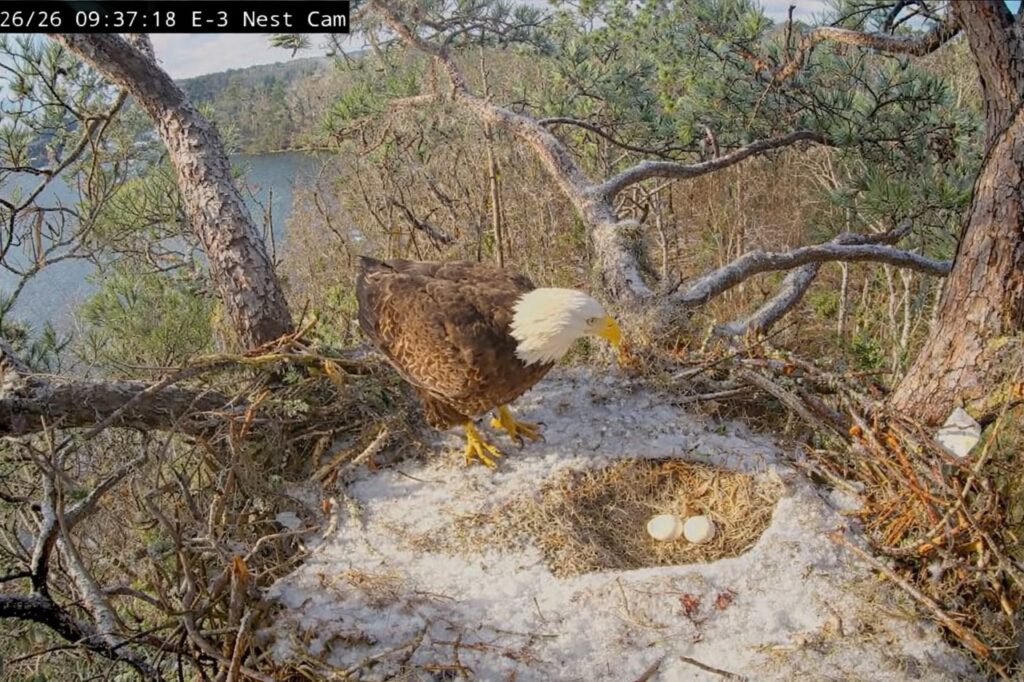
The resident pair, Alex II and Andria III, have guided these eggs through winter weather, cold snaps, and long nights on the nest. Their calm, methodical incubation has brought the nest to this pivotal stage, where the invisible becomes almost visible.
Watch Live ← Nest Cam | Approach Cam
Incubation Timeline: Where We Are Now
The first egg was laid on December 22, 2025, which places it at day 35 of incubation today. Bald eagle eggs typically hatch at around 35 days on average, making this egg officially “on time” and fully within the expected hatch window.
Receive updates like this one in your inbox. Sign up for our newsletter. 🦅
The second egg, laid on December 25, 2025, is now at approximately 32 days of incubation. While slightly behind the first, it is rapidly approaching the same critical phase and could show signs shortly after the first hatch.
With both eggs this far along, it is completely normal for viewers to be scanning for the tiniest changes, even when nothing obvious appears yet.
What a PIP Really Means and What Happens Next
A PIP, short for “pip hole,” is the first tiny crack a chick makes from inside the egg using its egg tooth. This is not a sudden event, and it does not mean a hatch will happen immediately. In fact, once a pip appears, it can take 24 to 72 hours, and sometimes longer, for the chick to fully hatch.
After a pip, the chick rests frequently. You may see long periods where nothing seems to change at all. Internally, however, the chick is absorbing the last of the yolk sac, strengthening its lungs, and preparing for the demanding process of zipping around the shell.
During this phase, adult eagles often appear extra still, intensely focused, or reluctant to give clear views of the eggs. This protective behavior is completely normal and often increases as hatching draws closer.
Why Viewers May Miss the First Signs
Early pips can be extremely difficult to see, especially at nests without zoom capability. The first crack may be no larger than a pinhead and visible only at certain angles or lighting conditions. Sometimes, the earliest clue isn’t visual at all. Instead, it is behavioral. An adult may appear to listen closely to the eggs or shift position more carefully than usual.
It is also possible for a chick to pip on the underside of the egg. In that case, the pip remains hidden from view until the egg is rolled later.
A Critical Window at KNF E-3
With one egg reaching the average hatch day and the second not far behind, the KNF E-3 nest has entered its most anticipated stretch of the season. This is the phase where patience matters most. Hours can pass with no visible change, followed by sudden progress that happens quickly.
Whether the first visible sign appears today or days from now, the nest is exactly where it should be. Alex II and Andria III have done everything right, and now nature takes the lead.
For viewers, this is the watch that rewards calm observation, steady optimism, and a little faith in timing.
Frequently Asked Questions
How long does it take for a bald eagle egg to hatch after a pip?
After a pip appears, it usually takes 24 to 72 hours for the chick to fully hatch. During this time, some chicks may take longer, depending on their strength and conditions in the nest.
How many days do bald eagle eggs incubate?
Bald eagle eggs incubate for about 35 days on average, though hatching can occur a few days earlier or later.
Can a pip be missed on live cams?
Yes. Early pips can be extremely small, hidden underneath the egg, or difficult to see due to lighting, camera angle, or lack of zoom.
Why do adult eagles seem restless or overly still near hatch time?
As hatching approaches, adults often become more attentive and careful. During this time, this can look like extra stillness, listening behavior, or frequent egg adjustments.


