
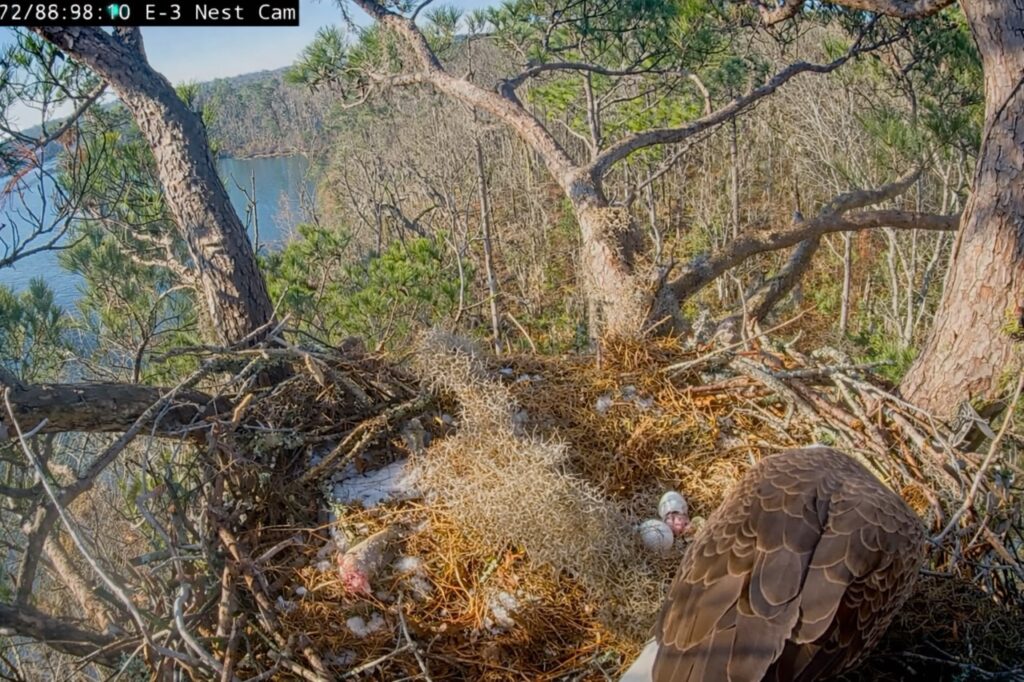
A quiet sense of anticipation settled over the KNF E-3 nest long before the hatch itself. By yesterday afternoon, January 27, viewers began noticing the first unmistakable signs that something extraordinary was about to happen. A small pip appeared on one of the two eggs, and soon after, soft chirping could be heard from inside the shell. Those faint sounds carried a powerful message. New life was close.
Watch Live ← Nest Cam | Approach Cam
As morning light returned today, January 28, excitement grew quickly. The pip hole had widened noticeably, making it clear that the eaglet inside was actively working its way into the world. Hour by hour, the shell showed more movement, each pause followed by renewed effort. Then, just before mid-morning, the long-awaited moment arrived. The eaglet emerged fully hatching from its shell, marking a joyful milestone for eagle parents Andrea III and Alex II and for everyone watching the KNF E-3 nest cam.
Receive updates like this one in your inbox. Sign up for our newsletter. 🦅
A Perfectly Timed Hatch
The timing of this hatch aligns beautifully with the nest’s history this season. Andrea III laid the first egg on December 22, 2025, followed by a second egg on December 25, 2025. With bald eagle incubation typically lasting around 35 days, today’s hatch falls right within the expected window, rewarding the patience of viewers who have followed every careful turn and shift of the eggs.
When to Watch for a Pip in the Second Egg
With the second egg laid three days later, attention now turns to what may come next. If the pattern holds, viewers may begin to see early signs of a pip in the second egg around January 30 or January 31. Some seasons bring a quick follow-up hatch, while others require a little more waiting. Either way, the nest remains full of promise.
What Changes Now for Andrea III & Alex II
With one eaglet now in the nest, daily life for Andrea III and Alex II will shift in subtle but meaningful ways. Andrea III will remain close, brooding the chick to keep it warm and protected, especially during the colder nighttime hours. Alex II is expected to step up food deliveries, bringing fresh prey to support the growing family.
Viewers can soon expect to witness the first feedings, with tiny bites carefully offered as the eaglet finds its strength. At the same time, the second egg will continue to receive careful incubation, a delicate balance the parents manage with remarkable instinct.
Calm Winter Weather Welcomes the New Arrival
Today’s weather has offered ideal conditions for a hatch. With full sun, a daytime high of 53°F, a low of 28°F, and very little wind, the environment around the nest remains stable and calm.
These gentle conditions help ease the transition as the eaglet adjusts to life outside the shell.
This joyful hatch marks the beginning of a new chapter at the KNF E-3 nest. With one eaglet already nestled safely and another egg still holding its secret, the days ahead promise tender moments, growing strength, and the quiet magic that unfolds when new life takes its first breaths.
Frequently Asked Questions
When did the eaglet hatch at the KNF E-3 eagle nest?
The eaglet fully emerged from its shell mid-morning on January 28, 2026, after pip activity began the previous afternoon.
When was the first pip observed?
The first pip was seen on January 27, 2026, and viewers also heard chirping sounds from inside the egg.
When might the second egg pip?
Because Andrea III laid the second egg on December 25, 2025, viewers may see a pip around January 30 or January 31, though timing can vary.
What will the parents do now that one eaglet has hatched?
Andrea III will brood and protect the eaglet while Alex II increases food deliveries. Feeding activity typically begins soon after a hatch.
How does today’s weather affect the hatch?
Sunny skies, light winds, and moderate winter temperatures help create stable conditions for the newly hatched eaglet and the remaining egg.


