
On November 13, 2026, the Pennsylvania deer rut is reaching its annual peak. In southwestern Pennsylvania, about 30 miles east of Pittsburgh, a live wildlife camera offers a glimpse into the woods as bucks search for receptive does during one of the most active periods of the whitetail breeding season.
According to the Pennsylvania Game Commission, mid-November is when white-tailed deer breeding typically reaches its highest point. As a result, bucks may travel farther, follow does, and appear in places where they are not normally seen. For those following the live Pennsylvania deer cam, this is an especially interesting time to keep an eye on the woods.
Live Pennsylvania Deer Cam
Why Mid-November Is Important for Pennsylvania Deer
The timing of Pennsylvania’s whitetail deer rut is backed by years of wildlife research. Between 2000 and 2007, the Pennsylvania Game Commission examined reproductive information from more than 6,000 does to determine when breeding occurred.
Receive updates like this one in your inbox. Sign up for our newsletter. 🦅
The results showed that approximately 90% were bred between mid-October and mid-December. However, the highest concentration of breeding occurred in mid-November. The agency has also identified November 11 through November 17 as the approximate median conception window in its historical research.
That puts November 13 right in the middle of Pennsylvania’s traditional peak breeding period. While individual deer may breed earlier or later, the research provides a reliable picture of when rutting activity is most concentrated throughout the state.
What Happens to Bucks During the Rut?
For much of the year, white-tailed deer follow relatively predictable routines. However, the breeding season brings noticeable behavioral changes. Bucks that ordinarily spend much of their time feeding and resting begin devoting more attention to locating receptive does.
Some travel greater distances, while others repeatedly investigate areas where females have recently passed. Bucks may also chase does or confront competing males. During this period, even a deer that usually remains hidden in the woods may become more visible.
One behavior to look for is a buck closely following a doe rather than stopping to feed. Another is a buck moving through an area with its nose near the ground, apparently checking scents left by other deer. Although these behaviors are common during the rut, their appearance on the live camera is never guaranteed.
A Live Look at Pennsylvania’s Whitetail Habitat
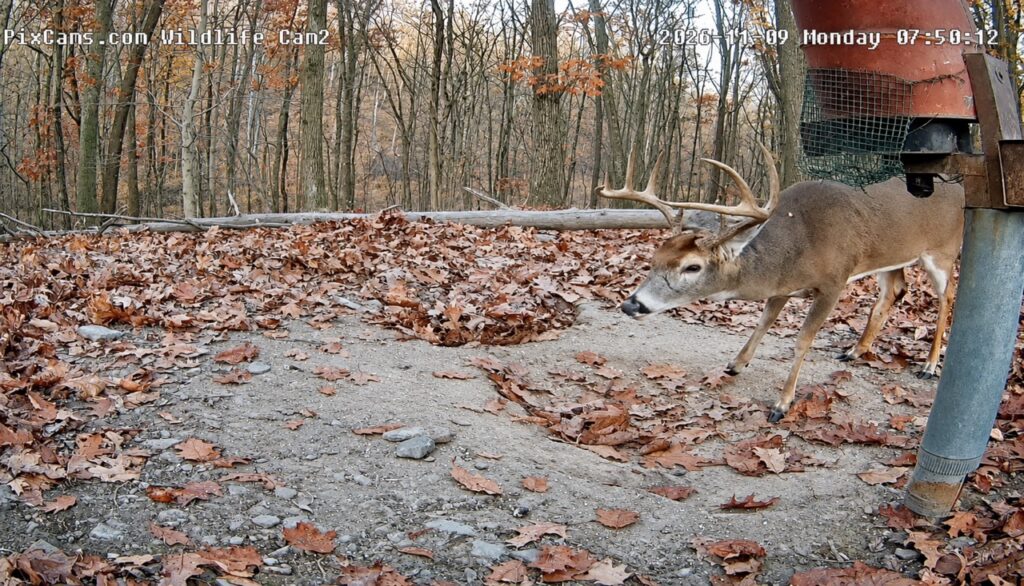
The Pennsylvania deer cam, operated by PixCams, broadcasts from private wooded property approximately 30 miles east of Pittsburgh. The camera runs 24 hours a day throughout the year and overlooks an area where wildlife regularly visits an automated feeder.
The feeder distributes small amounts of cracked corn and sweet feed three times daily, although the schedule can change with the seasons. Additionally, the camera features pan, tilt, and zoom capabilities. Operators sometimes follow animals as they move through the area, providing a closer look at visiting wildlife.
White-tailed deer are regular visitors, but the camera also attracts wild turkeys, raccoons, squirrels, skunks, and other animals. Because the property is not open to hunting, the camera offers an opportunity to observe deer visiting a relatively undisturbed feeding location.
Follow the Pennsylvania Deer Cam live on Sportsman’s Paradise Online.
Why Deer May Appear at Unusual Times
White-tailed deer are generally most active around dawn and dusk. However, breeding activity can influence their normal movement patterns. A buck searching for a doe may continue moving during daylight hours rather than following its usual feeding and resting schedule.
On October 21, 2026, the Pennsylvania Game Commission issued a public advisory warning that increasing deer activity during the rut also creates additional hazards for motorists. The agency explained that adult bucks are roaming their home ranges in pursuit of does, sometimes chasing females they encounter.
For wildlife-camera followers, that same seasonal movement creates opportunities to observe behavior that might be less common during other parts of the year.
How Long Will the Pennsylvania Deer Rut Last?
Although the main breeding peak occurs in mid-November, the season does not end immediately afterward. Some does breed later in November or December. In addition, female fawns that become sexually mature during their first year generally breed later than adult females. Consequently, rut-related behavior can continue well beyond the primary November peak.
The live Pennsylvania deer cam will remain available throughout the season, providing a chance to follow visiting wildlife as autumn gradually gives way to winter. Have you spotted a buck following a doe or noticed unusual deer activity on the camera? Share what you’ve seen in the comments below.
Frequently Asked Questions
When does the Pennsylvania deer rut peak?
The Pennsylvania deer rut generally peaks in mid-November. Historical research from the Pennsylvania Game Commission places the median breeding period around November 11 through November 17.
Are bucks more active during daylight hours during the rut?
They can be. Bucks searching for receptive does may travel more frequently and appear during daylight hours, even though deer are generally most active around dawn and dusk.
Where is the live Pennsylvania deer cam located?
The PixCams wildlife camera is located on private wooded property in southwestern Pennsylvania, approximately 30 miles east of Pittsburgh. It broadcasts wildlife activity throughout the year.


