
Thousands of elk are expected to return to Wyoming’s National Elk Refuge near Jackson Hole as winter approaches. With the annual migration window now opening in mid-November 2026, the stage is set for one of the region’s most remarkable seasonal wildlife gatherings.
Check out the Jackson Hole Elk cam
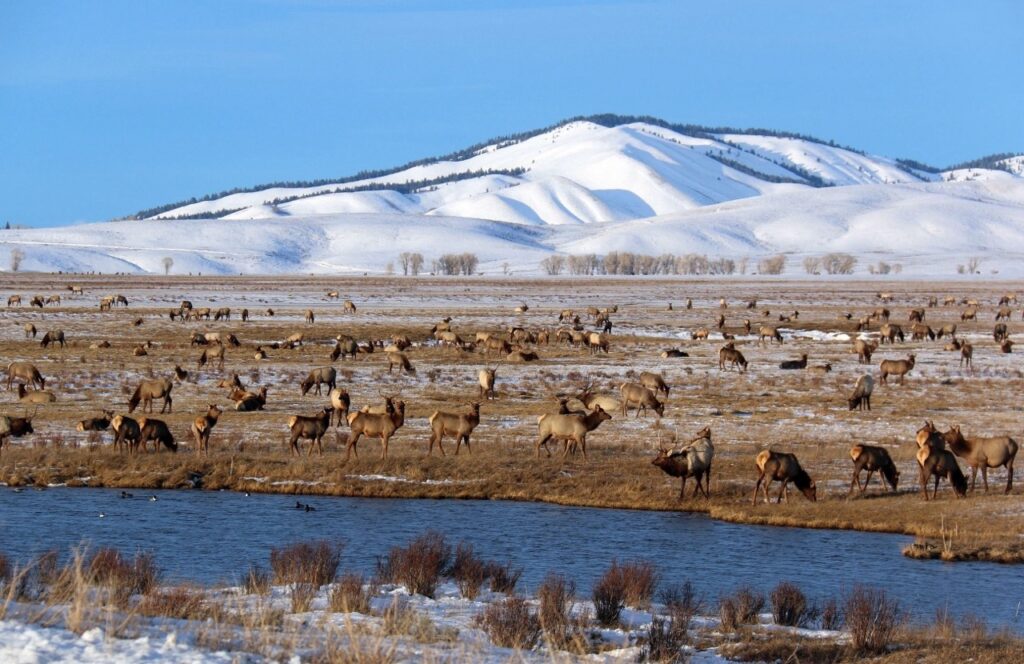
Each fall, elk leave their higher-elevation summer ranges and gradually move into the Jackson Hole valley. As snow begins covering mountain vegetation, the animals seek lower elevations where food is easier to reach. Eventually, thousands of elk may gather across the refuge’s open grasslands, transforming the quiet landscape into one of Wyoming’s most impressive winter wildlife spectacles.
When Will the Elk Arrive?
According to the U.S. Fish and Wildlife Service, elk are rarely observed on the National Elk Refuge until mid-November or early December. Although some animals may arrive earlier, the agency says elk are typically visible from mid-December through early April. Much depends on the weather.
When heavy snow covers vegetation in the surrounding mountains, elk begin moving toward lower elevations. However, milder conditions can allow them to remain farther from the refuge for longer.
The migration also happens gradually rather than all at once. Groups of elk can move into the valley at different times as winter conditions develop. For now, the absence of elk in the live camera’s view is not unusual. It also does not mean that no elk are present elsewhere on the refuge.
Thousands of Elk Spend Winter at the Refuge
Established in 1912, the National Elk Refuge protects more than 24,700 acres of grasslands, wetlands, and other wildlife habitat. The refuge provides critical wintering grounds for elk that spend warmer months in the surrounding mountains, including areas of Grand Teton National Park and the Bridger-Teton National Forest.
The U.S. Fish and Wildlife Service has previously estimated that roughly 8,000 elk spend winter at the refuge, although numbers vary with seasonal conditions. During the height of winter, large herds can spread across the valley floor. Some animals gather close together, while others move through the open landscape searching for food. As spring approaches and the snow begins melting, the elk gradually return to their higher-elevation summer ranges.
Follow the Elk Migration on the Live Cam
The Jackson Hole Elk Cam features live views streamed by SeeJH, offering a look at the National Elk Refuge area throughout the winter season. Two camera views are available, including one from Flat Creek Inn and another from the National Museum of Wildlife Art.
As the migration progresses, the cameras may capture elk moving across the landscape, grazing in open fields, or gathering in larger winter herds. However, elk are not the only animals that use this habitat. Bison, bighorn sheep, coyotes, bald eagles, and trumpeter swans are among the other wildlife species found in the refuge area.
The Winter Migration Is Just Beginning
For now, the Jackson Hole Elk Cam offers an opportunity to follow the changing landscape as another Wyoming winter approaches. There is no confirmed arrival date for the first elk that will appear on camera this season. Their movements will depend largely on snowfall and changing conditions in the surrounding mountains.
Yet the seasonal pattern is well established. As winter strengthens its grip on Jackson Hole, thousands of elk are expected to make their way toward the refuge. And when the herds begin appearing on camera, the quiet grasslands could look very different.
Frequently Asked Questions
When do elk arrive at the National Elk Refuge?
Elk typically begin appearing at Wyoming’s National Elk Refuge in mid-November or early December. However, larger herds generally become visible by mid-December as snowfall pushes the animals down from higher elevations.
How many elk spend winter at the National Elk Refuge?
Approximately 8,000 elk spend winter at the National Elk Refuge in a typical year, according to the U.S. Fish and Wildlife Service. However, the number varies depending on weather, snowfall, and migration patterns.
Why do elk migrate to Jackson Hole in winter?
Elk migrate to lower elevations as snow covers vegetation in the surrounding mountains. The National Elk Refuge provides open grasslands and winter habitat where the animals can find food, water, and shelter.
Where can I watch the Jackson Hole elk migration live?
You can follow the migration on the Jackson Hole Elk Cam. The page features live camera views overlooking the National Elk Refuge area near Jackson, Wyoming, offering opportunities to observe elk throughout the winter.
When do elk leave the National Elk Refuge?
Elk generally begin leaving the refuge in spring as snow melts and vegetation becomes available at higher elevations. Many return to their summer ranges in Grand Teton National Park and the surrounding national forests.
What other wildlife can be seen at the National Elk Refuge?
Besides elk, the refuge provides habitat for bison, bighorn sheep, coyotes, bald eagles, and trumpeter swans. Wildlife sightings vary throughout the year, with winter offering particularly good opportunities to observe several of these species.


