
The KNF E-1 bald eagle nest reached a meaningful milestone late in the evening on January 21, 2026, as the second egg officially hatched. With this hatch, the nest now holds two eaglets, completing the season’s two-chick family and marking the start of a new and active phase at the nest.
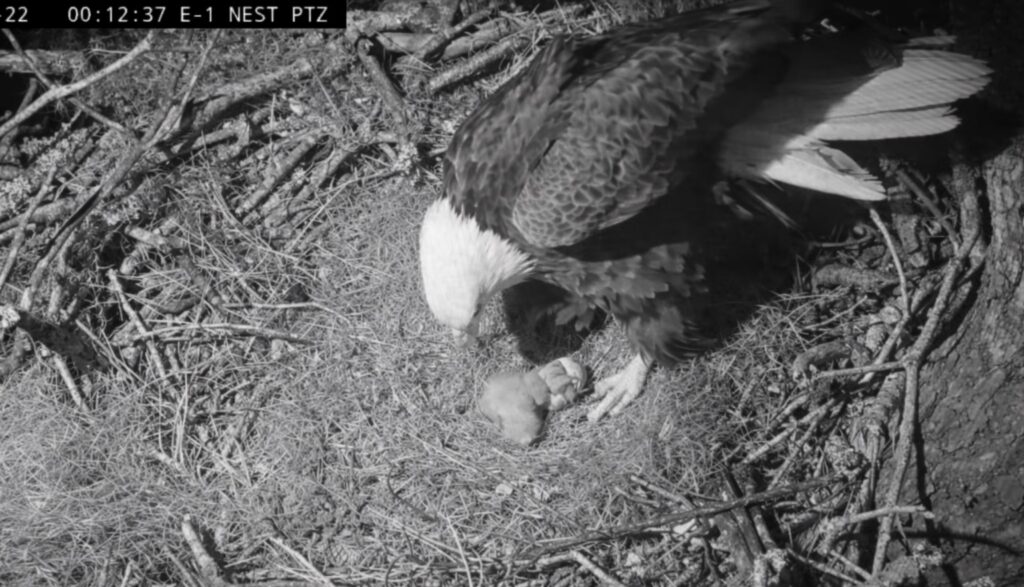
Earlier that same morning, a small pip was first observed in the shell, offering the earliest sign that the hatch was underway. Over the course of the day, subtle changes continued, quietly building toward the moment when the shell finally separated into two clear pieces. At KNF, this separation confirms a successful hatch, and with it, a new eaglet entered the world.
The first egg hatched just two days earlier, on January 19, 2026, making this a closely spaced but natural progression for the nest.
Watch Live ← Nest Cam
A Hatch That Unfolded Patiently
Unlike dramatic moments that unfold all at once, this hatch arrived slowly and steadily. After the initial pip appeared, the eaglet inside worked carefully over many hours, using small movements and internal strength to break free from the shell.
By late evening, the effort was complete. The nest now holds two eaglets resting beneath their parents, beginning life together in the protected center of the nest bowl.
Receive updates like this one in your email inbox. Sign up for our newsletter. 🦅
What Changes Now That Both Eggs Have Hatched
With both eggs now hatched, the adult eagles shift fully into brooding and feeding mode. Both parents will remain close to the nest, keeping the eaglets warm and protected, exchanging focuses on hunting and delivering food.
Early feedings remain gentle and deliberate. The parents tear food into tiny pieces and offer it slowly as the eaglets learn to lift their heads and swallow. The chicks spend much of their time resting while the adults make frequent adjustments to keep both eaglets warm and covered.
These early days are about energy conservation, warmth, and steady care.
Understanding the Age Difference Between the Chicks
Because the first eaglet hatched two days earlier, a natural size and strength difference already exists. This staggered hatching is common in bald eagles and does not automatically create problems.
Parents instinctively adjust their care, often positioning themselves and offering food in ways that give both eaglets opportunities to feed and stay warm. While differences may be noticeable at first, each nest develops its own rhythm as the days progress.
Nature is never predictable, and outcomes can vary, but these early stages are typically focused on growth and stability.
A New Chapter at the KNF E-1 Nest
With two eaglets now present, the KNF E-1 nest enters one of its most closely watched phases. Daily life will soon include more frequent feedings, subtle changes in posture, and increasing activity as the eaglets grow stronger.
While nothing in nature is guaranteed, the successful hatching of both eggs is a hopeful and important step forward. For now, the nest is filled with quiet movement, careful parenting, and the steady beginning of life for two young eaglets.
This live streaming experience has been provided by the USFS.
Frequently Asked Questions
When did the second eagle chick hatch at the KNF E-1 nest?
The second eagle chick hatched late in the evening on January 21, 2026, completing the two-chick family at the KNF E-1 bald eagle nest.
When did the first egg hatch?
The first egg hatched on January 19, 2026, about two days before the second chick emerged.
What does it mean when the shell is in two pieces?
At the KNF E-1 bald eagle nest, observers officially confirm a hatch when the eggshell separates into two clear pieces, showing that the chick has fully exited the egg.
What changes now that both eggs have hatched?
Now that both eggs have hatched, the parents focus on brooding the eaglets for warmth and providing small, frequent feedings while continuing to protect the nest.
Does the age difference between the two eaglets matter?
A small age difference is common in bald eagle nests and does not automatically cause problems. Parents often adjust their care to support both eaglets, especially during the early days.
What should viewers expect next At The KNF E-1 Bald Eagle Nest?
In the coming days, viewers can expect more frequent feedings, continued brooding, and gradual increases in movement as the eaglets grow stronger.


Welcome to the world!