
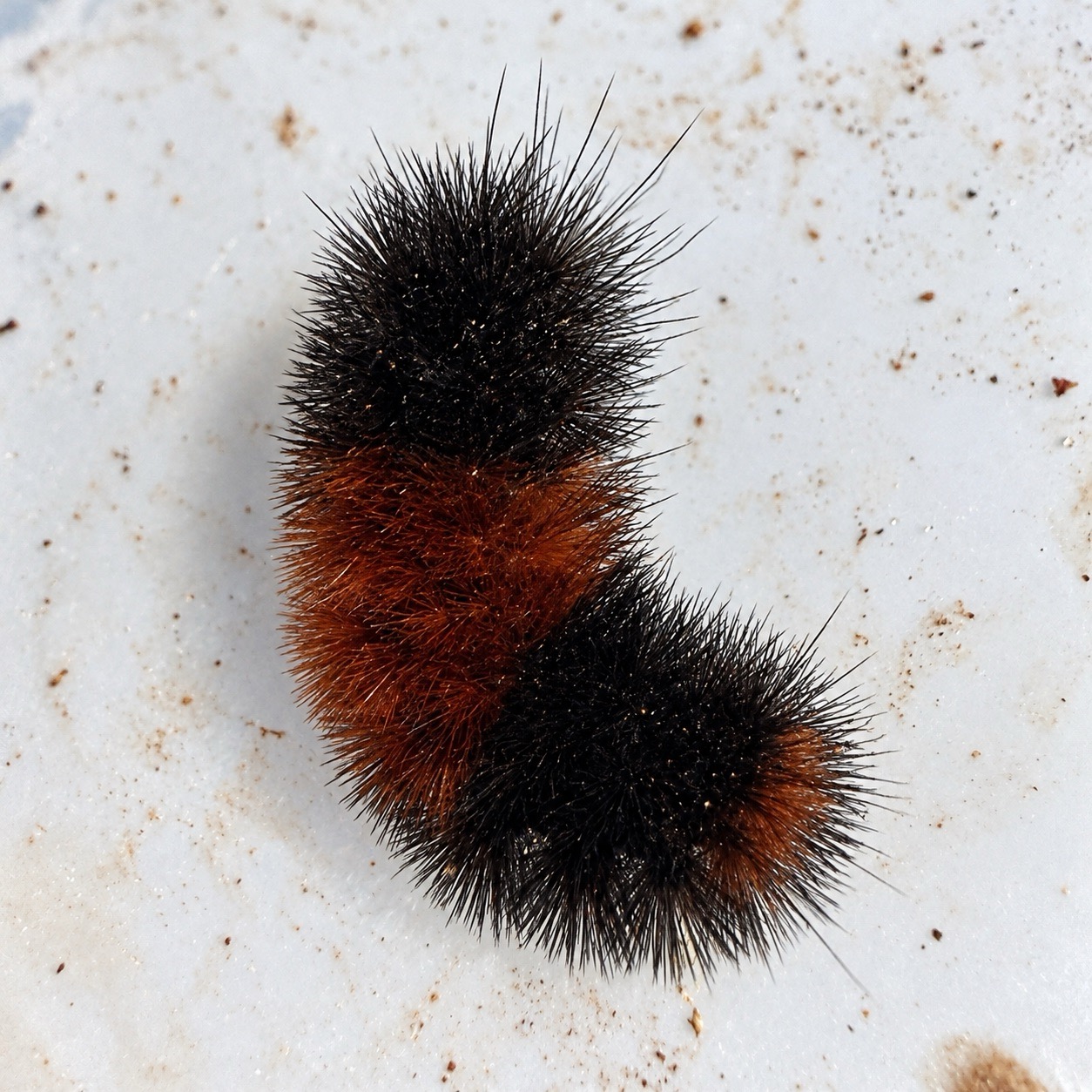

Every fall, woolly bear caterpillars can be spotted crossing sidewalks, crawling through lawns, and wandering among fallen leaves throughout much of the northern United States. These fuzzy little creatures are easy to recognize, with black hairs on both ends of their bodies and a rusty-brown band around the middle.
But look closely, and you might notice something interesting. Some woolly bears have wide brown bands, while others are almost entirely black. For generations, people have believed these colors hold a secret about the winter ahead.
Could a tiny caterpillar really tell us whether a harsh winter is coming?
The answer might surprise you. And the truth about how these little creatures survive the cold is even more remarkable.
Can Woolly Bear Caterpillars Predict Winter Weather?
According to an old weather legend, the colors of a woolly bear caterpillar can reveal what kind of winter is on the way. The belief is simple. A wide rusty-brown band means a mild winter with less severe weather. But if the black bands are wider, a long, cold winter is supposedly coming.
There is even a version of the legend that uses the location of the black bands to predict when winter will be the harshest. For generations, families have enjoyed finding woolly bears in the fall and comparing their colors. The tradition remains popular today. Some communities even hold festivals celebrating these fuzzy little weather forecasters.
But according to the National Weather Service, woolly bear caterpillars cannot reliably predict how harsh the coming winter will be. Their colors tell us something about the caterpillar itself, not what the weather will be like months later.
What the Black and Brown Bands Really Mean
The colors of a woolly bear are closely connected to its growth. When these caterpillars are young, they tend to have more black hairs. As they grow, they shed their outer skin several times.
With each stage of growth, the rusty-brown band around the middle often becomes wider. That means a woolly bear with a large brown band may simply be older than one with more black. Weather during the growing season, genetics, and other natural conditions can also affect their appearance.
Older woolly bears generally have wider reddish-brown bands. So, finding an almost entirely black caterpillar does not mean a terrible winter is coming. It may just be a younger woolly bear making its way through your yard.
Why Woolly Bears Are Suddenly Everywhere in the Fall
If you have noticed woolly bears crossing driveways and garden paths lately, there is a good reason. They’re searching for a safe place to spend the winter. As fall temperatures begin to drop, these caterpillars leave their feeding areas and look for shelter.
They may crawl beneath fallen leaves, hide under logs, or settle into other protected spots near the ground. Unlike monarch butterflies, which travel great distances to escape the cold, woolly bears stay and face winter where they live. And they have an extraordinary way of surviving it.
Their Amazing Secret: They Can Survive Being Frozen
This might be the most surprising thing about woolly bear caterpillars. They can survive freezing temperatures even when ice forms inside their bodies. As winter approaches, woolly bears produce a substance called glycerol.
Glycerol acts as a natural antifreeze. It helps protect the caterpillar’s cells from damage when temperatures drop below freezing. While ice can form in parts of the body, this protection helps keep the cells from suffering deadly damage. The caterpillar becomes inactive and waits for warmer conditions.
Some woolly bears can even survive repeated cycles of freezing and thawing, although these conditions can also be stressful and sometimes deadly. When spring arrives, the caterpillar warms up and becomes active again. For something so small and delicate-looking, that is an incredible survival trick.
What Do Woolly Bear Caterpillars Turn Into?
Another surprise is waiting for these fuzzy little creatures in the spring. Despite their appearance, woolly bears are not young butterflies. They are the caterpillar stage of the Isabella tiger moth, a pale yellowish-orange moth with small dark markings.
video: eon bug collection on YouTube
After surviving winter, the caterpillar eventually spins a cocoon using silk and some of its own hairs. Inside, it changes into a moth. The adult looks nothing like the black-and-brown caterpillar that spent the winter beneath the leaves.
After emerging, the moth can mate and produce another generation of woolly bears. And when fall returns, another group of fuzzy caterpillars will begin searching for winter shelter.
How to Help Woolly Bear Caterpillars in Your Backyard
One of the easiest ways to help woolly bears is to leave a little natural shelter in your yard. Fallen leaves, logs, and garden debris provide places where these caterpillars can hide from harsh winter conditions.
You do not have to leave your entire yard covered in leaves. Even a small, undisturbed area beneath shrubs or along a garden edge can offer valuable protection. If you discover a woolly bear outside, it is usually best to leave it where you found it.
There is no need to bring it indoors to keep it warm. These caterpillars are naturally adapted to spending winter outside. Giving them a safe place to shelter is one of the best ways to help.
More Interesting Facts About Woolly Bears
Do woolly bear caterpillars sting?
No. Banded woolly bears do not have venomous stingers. However, their stiff hairs can irritate sensitive skin, so it is best to avoid handling them.
What do woolly bear caterpillars eat?
Woolly bears feed on a wide variety of plants, including grasses, clover, dandelions, and other low-growing vegetation.
Why do woolly bears curl into a ball?
When frightened or disturbed, a woolly bear may curl into a tight ball. This helps protect its softer underside while exposing the stiff hairs on its back.
A Little Fall Visitor With an Amazing Story
The next time you notice a woolly bear crossing your backyard, take a moment to admire its colors. It might not know whether a snowy winter is coming, but this tiny creature has already prepared for the cold in a way most animals never could.
Hidden beneath the fallen leaves, it can survive freezing conditions and return in spring to begin an entirely new chapter of life. And woolly bears are not the only familiar visitors that signal the changing season. Keep an eye out for dark-eyed juncos returning to backyards as colder weather approaches.
Have you spotted woolly bear caterpillars this fall? Are they mostly black, or do they have wide brown bands? Tell us what state you’re in and what you’ve been seeing!


