
Across Minnesota and much of the northern United States this October, a small gray bird may soon be making a familiar return to backyard feeders. It hops through fallen leaves, searches the ground for seeds, and quickly disappears into nearby bushes. When it flies, a flash of white appears along the edges of its tail. Meet the dark-eyed junco, a little bird many people call a “snowbird.”
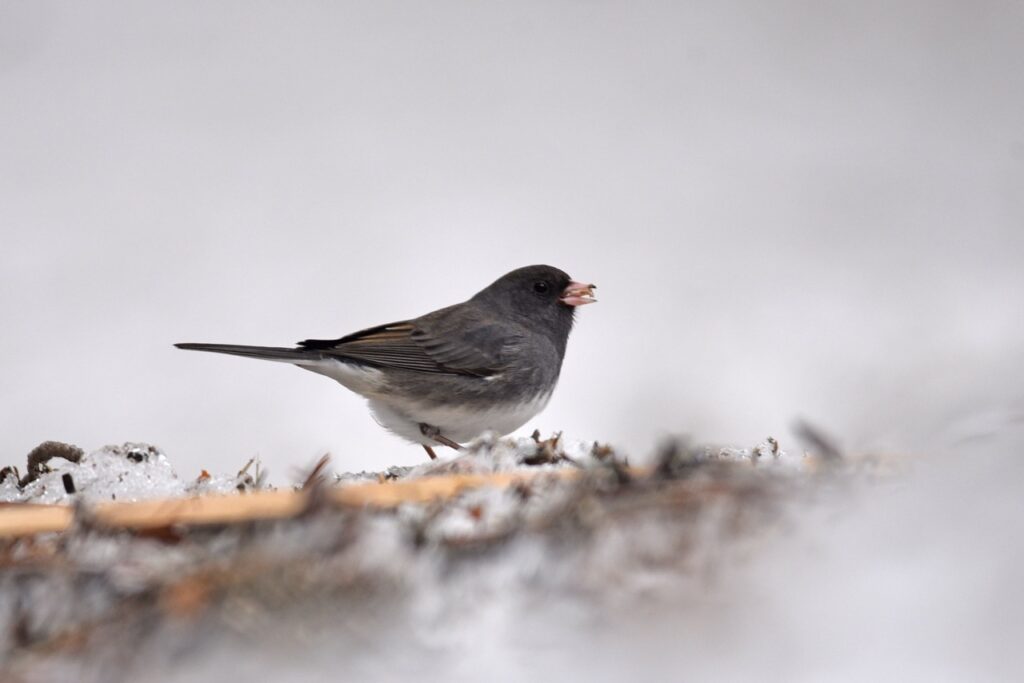
For backyard bird lovers, seeing one of these charming visitors can be a welcome reminder that winter is drawing closer.
Why Dark-Eyed Juncos Return in the Fall
Throughout the warmer months, many dark-eyed juncos live in forests farther north, including parts of Canada. Others spend the summer in mountain forests. As the seasons change, some begin traveling south or moving to lower elevations, where they spend the colder months.
Unlike birds that travel all the way to tropical regions, many juncos are happy spending winter in the United States. Their arrival is especially noticeable in places where they are rarely seen during summer. One day, a backyard may be filled with familiar summer birds. A few weeks later, little gray juncos are hopping beneath the feeders.
It is one of nature’s quieter signs that the seasons are changing. However, not all juncos migrate. Some live in the same general area throughout the year.
How to Recognize These Little Snowbirds
At first glance, a dark-eyed junco might look like an ordinary sparrow. Look a little closer, though, and several features stand out. In much of the eastern United States, these birds have dark gray heads and backs, bright white bellies, and small, pale pink bills.
Their most noticeable feature often appears when they fly. The outer tail feathers are bright white, creating a quick flash as the bird darts away.
Juncos also come in different colors across North America. Some western birds have dark hoods, brown backs, and warm, rusty-colored sides. Despite their differences, they share the same familiar habit of searching for food close to the ground.
Listen to Dark-Eyed Juncos Calling at a Bird Feeder
Dark-eyed juncos are known for their gray feathers, white bellies, and flashes of white when they fly. But have you ever heard their calls?
In the video below, listen as these little snowbirds call while visiting a bird feeder platform. Their sounds are another way to recognize these familiar backyard visitors.
Why You Might Find Dark-Eyed Juncos Under Your Bird Feeder
If you have a backyard bird feeder, you may notice something unusual about these little visitors. While chickadees and finches often perch directly on feeders, juncos spend much of their time below them. They hop across the ground, picking up seeds that have fallen from above.
They also search through leaves, grass, and patches of bare soil. According to the Cornell Lab of Ornithology, dark-eyed juncos eat mostly seeds. At feeders, they often prefer millet over sunflower seeds.
During the breeding season, they also eat insects. Their feeding style makes them entertaining to watch. Rather than staying in one spot, they often move in quick little hops, pausing to look around before continuing their search.
Watch for Dark-Eyed Juncos on the Live Bird Feeder Cams
Want to see these little snowbirds in action? As dark-eyed juncos head south for winter, You can watch for them at the live bird feeder cams in Prairie Village, Kansas. Keep an eye on the ground beneath the feeders, where juncos may appear searching for fallen seeds. Dark-eyed Juncos should generally start appearing here sometime this month.
You might just spot one of these winter visitors during its seasonal travels!
How to Welcome Juncos Into Your Backyard
You do not need an elaborate bird-feeding setup to attract these winter visitors. A clean, low feeding tray with white proso millet can provide an easy place for juncos to find food. They may also enjoy seeds that fall naturally beneath other feeders.
Nearby shrubs and low branches give them places to escape when they feel threatened. Leaving some native plants standing through fall can help, too. Their seed heads provide natural food for birds.
Fresh water is another welcome addition, especially as natural water sources begin freezing. And remember to keep feeding areas clean. Old, wet seed and droppings can help spread disease among birds. A simple, sheltered backyard can become an inviting place for juncos throughout the colder months.
Does Seeing a Junco Mean Snow Is Coming?
Dark-eyed juncos have earned their snowbird nickname because many people begin seeing them around the time colder weather settles in. But their arrival does not mean a snowstorm is about to happen.
Migration is part of their normal seasonal cycle. Shorter days and changing conditions help shape when birds move. A junco appearing in your yard is a sign of the changing season, not a forecast for the next snowfall. That does not make their arrival any less special. For many families, the first junco of fall is just as memorable as the first robin of spring.
A Few More Things to Know About Dark-Eyed Juncos
Do dark-eyed juncos stay together in winter?
Yes. During winter, juncos often gather in flocks. You might notice several searching the ground together, especially around feeding areas.
Where do dark-eyed juncos build their nests?
Most build their nests on or near the ground, often in sheltered spots beneath roots, rocks, or thick plants. They usually raise their young in woodland habitats.
Have the Snowbirds Arrived in Your Backyard?
As fall moves along, keep an eye on the ground beneath your bird feeders. That little gray bird hopping through the leaves might have traveled quite a distance to spend winter near your home. And once you recognize the flash of white in its tail, you may find yourself looking forward to its return every year.
Have you spotted your first dark-eyed junco this fall? Tell us what state you’re in and when you first noticed these little snowbirds returning!


