
October 22, 2026, Port Rowan, Ontario. For generations, the haunting calls of common loons have echoed across northern lakes each summer. But a sweeping new study has uncovered something troubling beneath those familiar sounds. Loon chick production has declined by approximately 40% on average across most of the regions scientists monitored in North America.
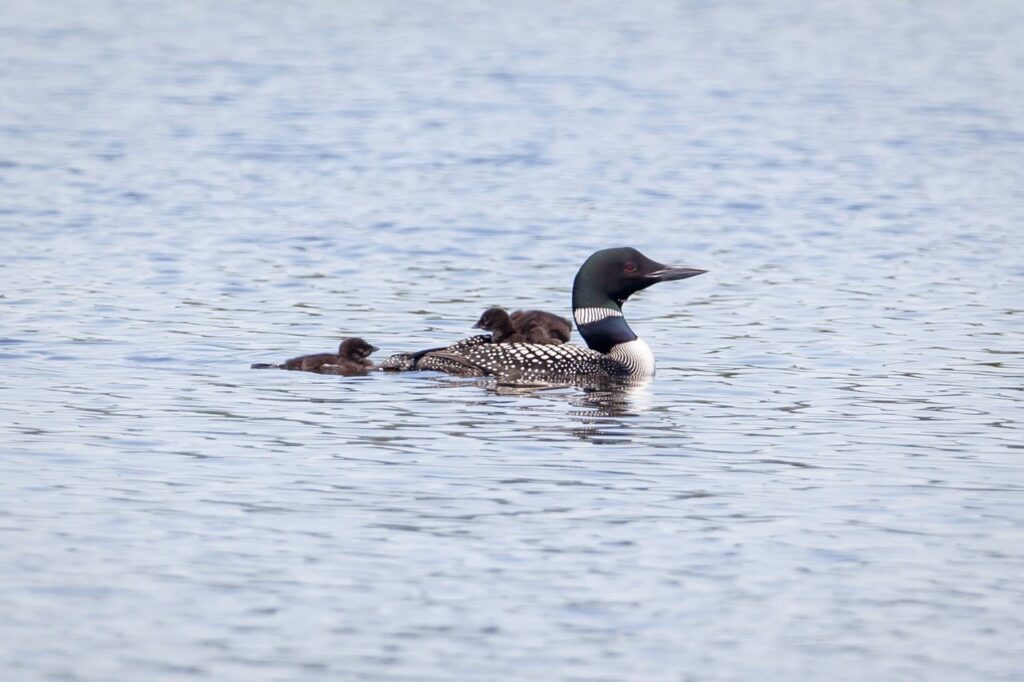
Researchers examined nearly five decades of nesting records and discovered that loon families are raising substantially fewer chicks than they once did. And scientists believe a change happening beneath the surface of our lakes could help explain why.
Receive updates like this one in your inbox. Sign up for our newsletter. 🌺
For many people who spend summers on northern lakes, the haunting calls of common loons are unforgettable. The video below captures these remarkable birds vocalizing, offering a reminder of why their future matters to so many wildlife enthusiasts.
Video: Harry Collins Photography on YouTube. Common loons calling. Footage illustrates the species and is not part of the 49-year research study.
Nearly 50 Years of Loon Records Reveal a Widespread Decline
The research, published in the scientific journal FACETS, represents one of the largest investigations of common loon breeding success ever conducted. Researchers combined 45,591 breeding records collected between 1975 and 2023 from 3,421 lakes across Canada and the United States.
Thousands of volunteers helped gather the observations, carefully documenting loon pairs and the young they raised. When scientists analyzed the information, they uncovered a troubling pattern.
Loon chick production declined by approximately 40% on average in 10 of the 12 monitored regions. The declines varied considerably. Some regions experienced relatively modest changes, while others recorded dramatic reductions in breeding success.
Importantly, the findings do not mean that North America has lost 40% of its adult loons. Instead, researchers measured the number of chicks that reached approximately six weeks of age for each territorial pair. A pair of adult loons might continue returning to the same lake year after year, yet successfully raise fewer young. Over time, that pattern could threaten the next generation.
Some Regions Have Lost Nearly Three-Quarters of Their Loon Chick Production
The most dramatic declines occurred in Canada’s Atlantic and Prairie provinces. In the Atlantic provinces, loon chick production fell approximately 74% between 1992 and 2023. The Prairie provinces recorded a decline of about 65% over the same period. Ontario also experienced a substantial reduction, with chick production falling approximately 45% between 1981 and 2023.
Researchers found additional long-term declines in several parts of the United States, including Wisconsin, New York, Vermont, New Hampshire, Massachusetts, and Washington. However, not every region followed the same pattern.
Maine and Quebec maintained comparatively stable chick production, with some evidence of slight increases. These differences offer researchers valuable clues as they investigate what makes certain lakes more successful breeding habitats than others.
Could Cloudier Lake Water Be Part of the Problem?
One of the most intriguing possibilities involves something many people have noticed in freshwater lakes: declining water clarity. Common loons hunt fish underwater, relying heavily on their eyesight to locate prey. During nesting season, adult loons must catch enough fish to feed themselves and their growing chicks.
Scientists suspect that increasingly cloudy water could make that task more difficult. Heavy rainfall can wash sediment and organic material into lakes. As the water becomes murkier, loons may struggle to locate fish efficiently. That could mean less food for their chicks during a critical period of growth.
Previous research in northern Wisconsin found a connection between declining lake clarity and reduced loon breeding success. However, the new 49-year study did not establish that cloudy water caused the declines across North America.
Researchers are now investigating whether the relationship extends to other regions. Shoreline development, human disturbance, pollution, and other environmental factors may also contribute.
Why Fewer Loon Chicks Matter for the Future
Common loons can live for decades, and adult birds often return to familiar breeding territories. That longevity creates an important challenge for conservation researchers. A lake might still host a familiar loon pair each summer even as the number of young birds successfully joining the population gradually decreases.
Because adult loons can survive for many years, the effects of reduced breeding success may take time to become apparent. The study also found that long-term average chick production remained at or above a commonly used population-stability benchmark in all monitored regions.
But researchers warn that continued declines could eventually place greater pressure on breeding populations. The findings highlight why monitoring young birds matters just as much as counting adults.
What Can Lake Visitors Do to Help Loons?
Despite the troubling findings, researchers emphasize that people can make a meaningful difference. Birds Canada encourages boaters, anglers, and lakeshore residents to adopt practices that protect loon families.
Using lead-free fishing tackle helps prevent poisoning when loons accidentally swallow lost sinkers or jigs. Properly disposing of fishing line reduces the risk of entanglement. Boaters can also help by slowing down near loon families and keeping a respectful distance, especially when adults are caring for young chicks.
Protecting natural shorelines and minimizing disturbance near nesting areas can also improve breeding conditions. These actions cannot solve every environmental challenge loons face, but they can reduce avoidable threats.
A Wake-Up Call for North America’s Northern Lakes
The common loon’s haunting call remains one of the most recognizable sounds of summer across northern North America. From quiet Canadian lakes to the forests and waterways of the northern United States, these remarkable birds have become part of the region’s natural identity.
Now, nearly five decades of observations reveal that successful breeding is becoming more difficult across much of their monitored range. Scientists still have important questions to answer. Why are some lakes losing so many chicks while others remain productive? How much does declining water clarity contribute? And what can conservation efforts do to reverse the trend?
The answers may determine whether future generations continue hearing those unforgettable calls across their favorite lakes. For now, the research offers an important reminder: protecting the adult loons we see today also means protecting the chicks that will return tomorrow.
Follow nesting activity during the breeding season on the Ten Mile Lake Loon Nest Cam in Minnesota or the New Hampshire Loon Nest Cam at Sportsman’s Paradise Online.
Frequently Asked Questions
Why are common loons raising fewer chicks?
Scientists are investigating several possible causes, including declining water clarity, changing rainfall patterns, shoreline development, and human disturbance. Researchers have linked cloudier water to reduced breeding success in northern Wisconsin, but they have not confirmed a single cause across North America.
How much has loon chick production declined?
A 2026 study found that loon chick production declined by approximately 40% on average across 10 of 12 monitored regions over several decades. The declines ranged from roughly 14% to 74%, depending on the region and study period.
Are common loons endangered?
The common loon is not globally classified as endangered, but some regional populations face conservation challenges. The new study highlights widespread reductions in breeding success that could affect future populations.
How can people help protect loon chicks?
Boaters can keep their distance from loon families, slow down near nesting areas, and avoid separating parents from their chicks. Anglers can use lead-free tackle and dispose of fishing line properly to reduce poisoning and entanglement risks.


